Scorecard or Commentary: Two Ways to Follow a Cricket Match
Scorecard or commentary: learn which view answers your immediate question, then switch between match figures and play-by-play without losing the thread.
The common mistake when following a cricket match is trying to read every scorecard entry while catching every line of commentary. That splits your attention and can leave you unsure what changed. A scorecard or commentary can each help you follow the game; choose based on whether you need the current state, the sequence of play, or both.
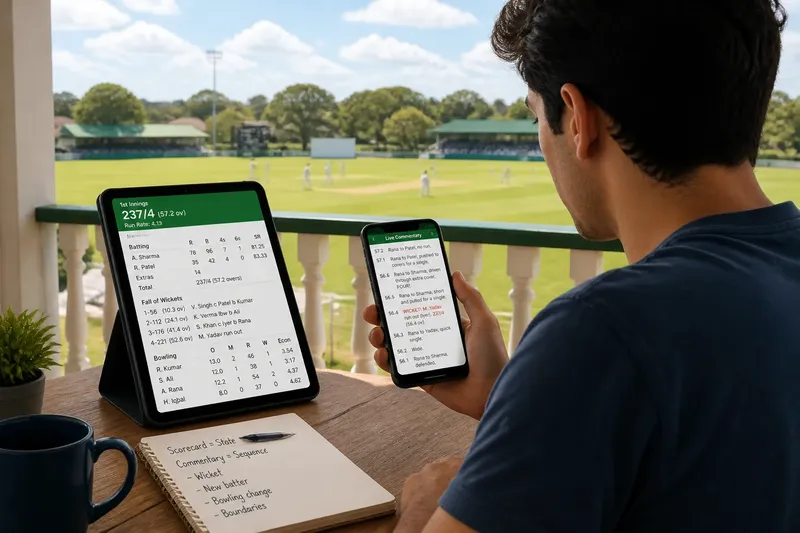
A scorecard organizes runs, wickets, overs, batter scores, bowling figures, and dismissals. Commentary describes events as they happen. Use the scorecard to locate the match; use commentary to understand a moment.
What can a scorecard tell you quickly?
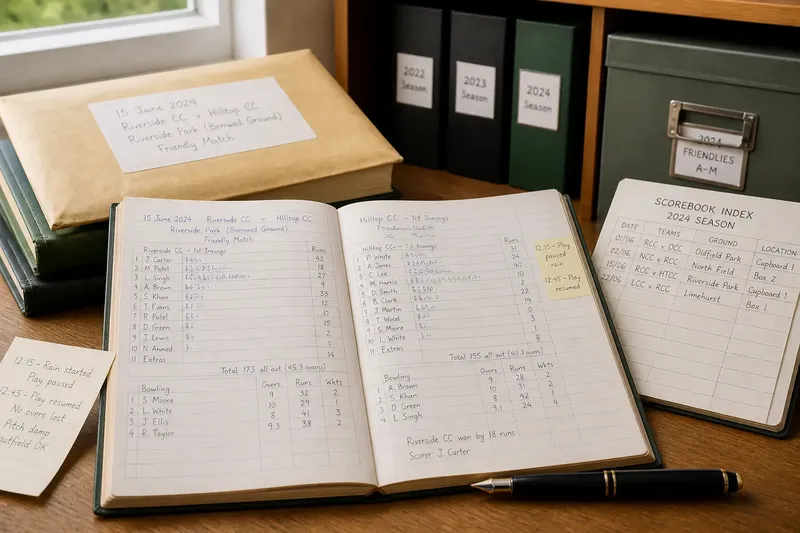
A scorecard is a compact record of the innings. Start with the total and wickets, then check which batters are in and how they have contributed. The bowling figures and fall of wickets can add useful detail about who has taken wickets and how the innings has developed.
It is especially handy when you return after a break or want to check a specific fact. You can see who is batting and how the total has changed without reading a stream of updates.
Figures do not explain every event. A batter’s score alone will not tell you whether they defended carefully or attacked, and bowling figures may not capture a close appeal or a fielder’s contribution. Treat the scorecard as a record, not a transcript.
What does commentary add to the match?
Commentary puts events in sequence. A radio or television broadcast, or a live text feed, can explain what happened on a delivery, how players responded, and why a change mattered. It may describe a field adjustment, a dismissal, or a new batter settling in.
That sequence helps connect the score to the action. If the total rises without a wicket, commentary may explain whether the runs came from boundaries, running, or extras. The amount of detail varies: radio and television bring spoken description, while text updates are often concise.
A running feed takes attention and can be hard to catch up with after an interruption. Check the scorecard for the current state, then find a recent recap to learn what changed.
Which view fits the time and attention you have?
Choose the format that fits what you are doing. Radio works when you cannot keep looking at a screen. A scorecard suits a quick check during a break. If you can follow closely, keep both available and switch when your question changes.
- Check the scorecard: If you need the total, wickets, or current batters, use the scorecard; if you need the reason for a change, look for commentary.
- Use commentary: If you want the order and nature of events, follow a broadcast or text feed; if the stream is too dense, pause and check the scorecard.
- Combine both: If you want both status and context, check the scorecard at a natural break and use commentary for the passages you care about; if you have little time, prioritize the one that answers your immediate question.
- Choose radio: If listening is practical but looking at a screen is not, use radio; if you need to scan updates quietly, choose text instead.
- Choose live text: If you cannot listen, read the feed for event descriptions; if you need a broader view than short updates provide, open the scorecard or a match summary.
- Return after a break: If you have missed action, check the current score and recent wickets; if the figures do not explain the change, read a recap or recent commentary.
Say you have a short break and see that a side has lost a wicket. First, you open the scorecard and note the total, the new batter, and the fall-of-wickets entry. Next, you read the latest commentary update, which says the previous batter was caught and the new batter has faced a few cautious deliveries. The scorecard gives you the state; the update supplies the sequence. If you have no time for the update, you still know who is in, but not how the wicket fell.
How do you scan a scorecard without getting lost in details?
Start with the innings total and wickets. Then find the current batters and their individual scores. Check the bowling figures and recent fall-of-wickets entries only if they help answer your question.
Some scorecards list extras, such as wides or no-balls, and show how a batter was dismissed. Look at those details when the total or a wicket needs explanation. If a contribution is hard to judge from the figures, compare it with the match situation or consult commentary; a score alone does not show the choices and pressure around it.
Scan the main score, current batters, and recent wickets before opening smaller details.
How can you follow commentary without catching every line?
Listen or read for changes rather than treating each update as equally important. A wicket, a new batter, a bowling change, a run of boundaries, or a disputed decision can shift the match. Between those moments, follow at a relaxed pace.
If you return after missing part of the action, first check the scorecard for the current state. Then read a recent recap or commentary passage to learn what changed. This gives you a clear starting point instead of making you search through a long feed.
Formats differ. Radio offers spoken description, television pairs commentary with images, and text lets you scan quietly. If one format demands too much attention, switch to another or use a scorecard to check the state.
Which match view should you choose in common situations?
Is a scorecard enough for a beginner?
It can answer a quick question about the score, wickets, or batters. If an event or abbreviation is unclear, check a brief commentary update or match summary.
Is commentary useful if I cannot watch?
Yes. Radio describes the action aloud, while live text provides written updates. Choose the format that fits your surroundings and attention.
How do I follow a match if I keep missing parts?
Check the scorecard for the current state, then read a recent recap for the changes. You do not need to recover every delivery to understand the main developments.
Do I need to understand every scorecard abbreviation?
No. Begin with the total, wickets, current batters, and basic bowling figures. Look up a label when it affects the question you are trying to answer.
How do you choose between scorecard or commentary?
Ask what you need right now. For a quick status check, open the scorecard. To follow the sequence and understand why an event matters, choose commentary. If you want both, use one as your main view and consult the other when a detail is unclear.
Your choice can change as the match moves on. After a break, the scorecard can help you reorient; during a passage you want to follow closely, commentary can supply the action. For scorecard or commentary, let your immediate question decide, and switch when it changes.