Before the Scoreboard: Cricket’s Handwritten Records
Cricket handwritten records preserve match details beyond the result. Learn how to label, store, index, and share scorebooks so future readers can find them.
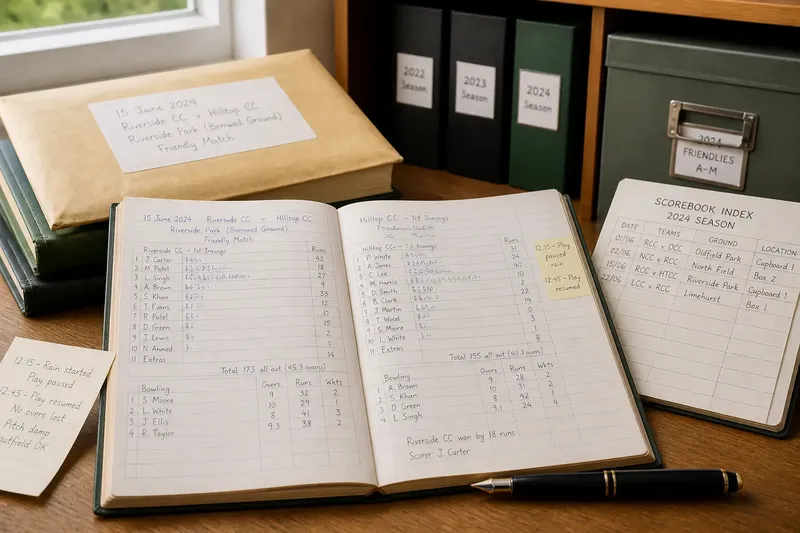
The common mistake with cricket handwritten records is treating the scorebook as a rough draft once the result reaches the scoreboard. That can leave a club with no clear record of who played, where the match took place, or why its account contains a pause or correction.
Imagine a neighborhood club finishing a friendly on a borrowed ground. Its volunteer scorer has kept a bound notebook beside the boundary, and the club wants to store it for future reference. A few clear entries and a simple filing routine can make the book understandable without asking anyone to reconstruct the day from memory.
What can a scorebook preserve beyond the result?
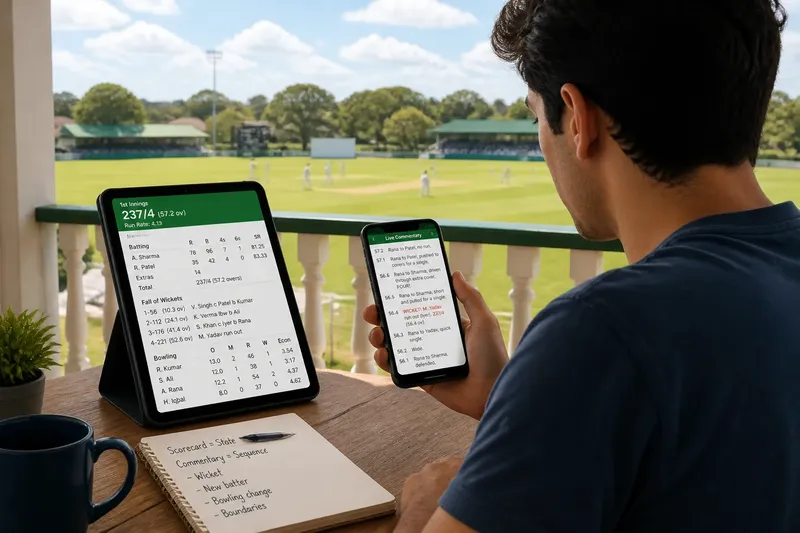
A scoreboard is designed for quick reading. A scorebook can also record the match date, ground, teams, names used that day, and a brief note if play paused or the planned finish changed. Those details give later readers context for the written account.
Use names consistently. If a player is known by a nickname, write the name the team recognizes and add a formal name in a margin when it is known. If it is not known, do not guess; leave the entry as written and ask the club contact to clarify it before filing.
A short note can also identify who kept the book or where it came from. Keep it factual and brief, so the record remains easy to read.
How should a scorer make the record readable?
Write the match heading clearly and leave enough room for corrections. If an entry needs changing, make the correction legible and preserve enough of the original mark to show that a change occurred. Avoid unexplained blotting or rewriting a page.
For interruptions, add a concise note beside the relevant passage. “Play paused” and “play resumed” can explain a break without turning the scorebook into a diary. Do not use the margins to settle disputes or assign blame.
At the end, check that the book identifies the match and participants, and write the result where a reader can find it. Mark an uncertain entry as uncertain rather than presenting a guess as fact.
How can a club file a scorebook for later?
Before storing the book, label its cover or a paper sleeve with the date, teams, and ground. Add those same details to an index that points to the book’s shelf, box, or folder. A reader should be able to locate the record without opening every notebook.
- Check that the date, teams, and ground appear on the cover or sleeve; if they do, file the book under the club’s chosen season system, and if they do not, add a clear label before filing.
- Check whether the pages are dry; if they are, close and store the book, and if they are damp, leave it open in a dry, shaded place until it is dry.
- Check for loose notes; if a note identifies this match, place it with the book, and if its match is unclear, keep it separate until the club can identify it.
- Check whether the cover is intact; if it is, store the book normally, and if it is loose or damaged, use a paper sleeve and ask a preservation professional before attempting repairs.
- Check that the index includes the book’s location; if it does, return the book to that location, and if it does not, record the location before shelving it.
- Check whether someone needs to borrow the original; if so, record who took it and where it should be returned, and if not, keep it in the club’s agreed storage place.
Choose a dry cupboard away from food, drink, and direct sun. If you make a digital copy, photograph or scan the cover and every written page, then save the files with the match date and team names. Keep the original; the copy makes consultation easier but does not replace the notebook.
What does a complete filing process look like?
Say the volunteer has a notebook from a friendly match, a loose note saying play paused, and a club index that records books by season. The heading in the notebook gives the date, teams, and borrowed ground, while the result is written at the end.
The volunteer first checks the pages and finds them dry, so the book can be closed and stored. The note clearly refers to the interruption in that match, so it goes inside the notebook rather than into a general pile. The volunteer then labels the sleeve with the heading details, adds the shelf location to the index, and returns the book to the agreed cupboard. If the note had no clear link to the match, the volunteer would keep it separate until someone could identify it instead of attaching it by guesswork.
What should readers know about cricket handwritten records?
Why keep a scorebook if the result is already online?
An online result may omit names, interruptions, and local details recorded in the book. Keeping the notebook gives the club a fuller account to consult later.
Who should write in the scorebook?
The person responsible for recording the match should make the entries when possible, which helps keep handwriting and corrections consistent. If another scorer takes over, add a brief note identifying the change.
Can a handwritten scorebook be corrected after the match?
Correct an entry only when the mistake and accurate detail are clear. Keep the correction legible and do not fill uncertain gaps with a guess.
What should a club do with old scorebooks?
Organize them by season or another system the club can maintain, and keep an index pointing to each book. For records with historical or personal importance, ask a local archive or qualified preservation professional before attempting repairs.
How can a club keep the archive useful?
Choose one storage place and one person to maintain the index. Keep the entry format consistent: date, teams, ground, and storage location. When a book is borrowed, note who has it and where it should return.
Good cricket handwritten records do not need elaborate equipment. A clear heading, careful corrections, and a reliable filing habit let future readers find the notebook and understand what it can—and cannot—tell them.