Cricket Gear Does Not Need to Match to Work Well
Cricket gear does not need to match: choose a bat, ball, pads, and gloves for the kind of play you expect, not for a coordinated look.
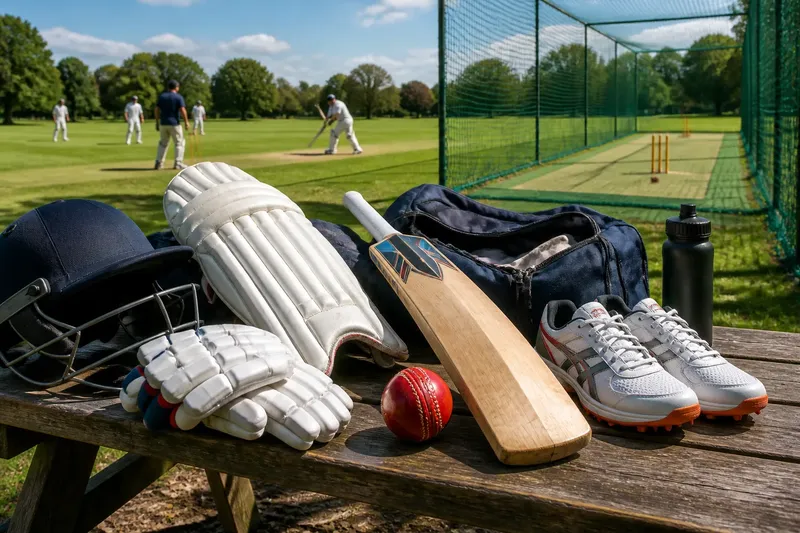
The common mistake with cricket gear is treating a coordinated set as the starting point. It can cost you useful choice: a beginner may end up with equipment that looks complete but feels wrong for the game they actually play. Cricket gear does not need to match; each piece should suit its job, its user, and the setting.
What kind of cricket are you preparing for?
Start with the likely session, not a bundle. A match on a maintained grass pitch, a casual game in a park, and practice in a net can call for different combinations. The ball, playing surface, pace of play, and rules shape what is useful.
For soft-ball cricket, a heavy, hard-ball bat and full protective equipment may be unnecessary. For hard-ball play, a soft training ball is not a substitute for the ball used in the session, and protective gear needs to be appropriate. Ask the organizer what ball and format to expect before buying.
Then sort equipment into three groups: essential for this session, helpful if you already own it, and not needed yet. That simple separation keeps a neat-looking package from deciding for you.
Does a bat have to match the rest?
No. Choose a bat for the player and the expected ball, rather than its color, brand, or place in a set. A bat should feel manageable when held and moved through a comfortable swing. If you are shopping in person, ask staff to help assess the fit; a young player may need a different size or weight than an adult.
Check the bat’s intended use and construction. A bat designed for hard-ball cricket may not be the right choice for a soft-ball social game, and a light plastic bat has its own limited use. The surface and ball determine how much force the bat will meet, so avoid assuming one bat suits every setting.
Imagine a beginner invited to a park session where the organizer says a foam ball will be used. Instead of buying a full hard-ball kit, the player chooses a light bat suited to that ball and brings comfortable shoes. The expected result is a simpler, more appropriate setup, with no unused protective gear to carry.
Which pieces deserve attention before a hard-ball session?
For hard-ball cricket, protection is not a matching accessory. A helmet, batting pads, and gloves each address different areas, and their fit matters more than whether they came from one range. If you are new to the format, ask the club or session leader what equipment is required and how it should fit.
- Helmet: Check that it sits securely and is intended for the kind of cricket being played. Do not borrow one that shifts or obstructs your view.
- Batting pads: Look for a secure fit that allows comfortable movement. Pads that slide or restrict your stance can distract you.
- Batting gloves: Check that the fingers and palm fit without bunching. A glove that twists on the handle can make gripping awkward.
- Footwear: Choose shoes that suit the playing surface and provide a stable feel. Studs or spikes are not automatically suitable for every ground.
For safety-critical equipment, follow the maker’s instructions and the rules of the club or ground; ask a qualified coach or equipment specialist if fit or suitability is unclear.
What can you borrow, share, or leave at home?
Borrowing can make sense when you are trying a new format or attending a one-off session. Check in advance whether the organizer provides bats, balls, or protective equipment. If you borrow personal protective gear, confirm that it fits and is in usable condition rather than assuming any available item will do.
Shared bats and balls are often practical for informal play, where the group has chosen suitable equipment for its rules. Personal items such as gloves and protective wear are more dependent on fit and comfort. If you plan to play regularly, begin by buying the pieces you need most often, then add others as your playing routine becomes clearer.
A kit bag is useful only if you have items to carry. A sturdy tote or backpack may be enough for a casual session. Keep wet shoes or clothing separate from clean gear, and avoid packing items you will not use simply to make the bag feel complete.
How should you choose cricket gear without buying a set?
Use a short decision list before shopping. It helps you compare individual items on purpose rather than being pulled toward a package deal.
- Name the session: Write down whether it is soft-ball play, hard-ball cricket, net practice, or a social game. Buy for the activity you expect to attend.
- Confirm the ball: Ask whether the session uses a tennis ball, foam ball, or hard cricket ball. Choose a bat and protective needs around that answer.
- Check the surface: Find out whether play is on grass, an artificial pitch, or a hard open area. Use footwear suited to that surface.
- Try fit where possible: Hold the bat and try on gloves or pads before buying. If fit feels restrictive or unstable, ask for another option.
- Ask what is supplied: A club or organizer may already provide shared equipment. Do not buy duplicates until you know what you need to bring.
- Buy for regular use first: Choose the item that will make the biggest practical difference in the sessions you attend. Leave occasional-use extras until a real need appears.
Product labels, manufacturer instructions, and local playing rules can affect suitability, so check them when choosing gear.
What do new players ask about cricket gear?
Can I use different brands for my cricket equipment?
Yes. Brand consistency does not determine whether separate items work together. Focus on fit, intended use, and the requirements of the session.
Do beginners need a complete cricket kit?
Not necessarily. Find out what the organizer supplies and what kind of ball the group uses, then bring or buy only what the session requires. A complete set may make sense later if you play a format that regularly needs all of its pieces.
Can I use one bat for every kind of cricket?
Some players may use one bat across similar sessions, but not every bat suits every ball or playing condition. Check the intended use and ask the organizer what is appropriate before taking it to a different format.
Is secondhand cricket gear a sensible option?
It can be, especially for items that fit well and are in sound condition. Inspect for visible damage and check protective equipment carefully; if you cannot judge its condition or suitability, ask an experienced coach or equipment specialist.
When is a matching set actually useful?
A coordinated set can be convenient if you already know the format, need several pieces at once, and have confirmed that every item suits the player. It can also make storage straightforward when equipment is used together. Those are practical reasons to choose a set, not proof that matching gear performs better.
For many players, a gradual approach is clearer: borrow what is available, learn the demands of the session, and purchase suitable individual items as needs become specific. The right kit may look mixed. If each piece fits the person and serves the game they are playing, the lack of a matching logo is beside the point.
Before your next cricket session, ask one useful question: what will I actually use today? Let the answer shape the bag, and leave the rest on the shelf until the game calls for it.